
Some of the best investment lessons come from making mistakes.
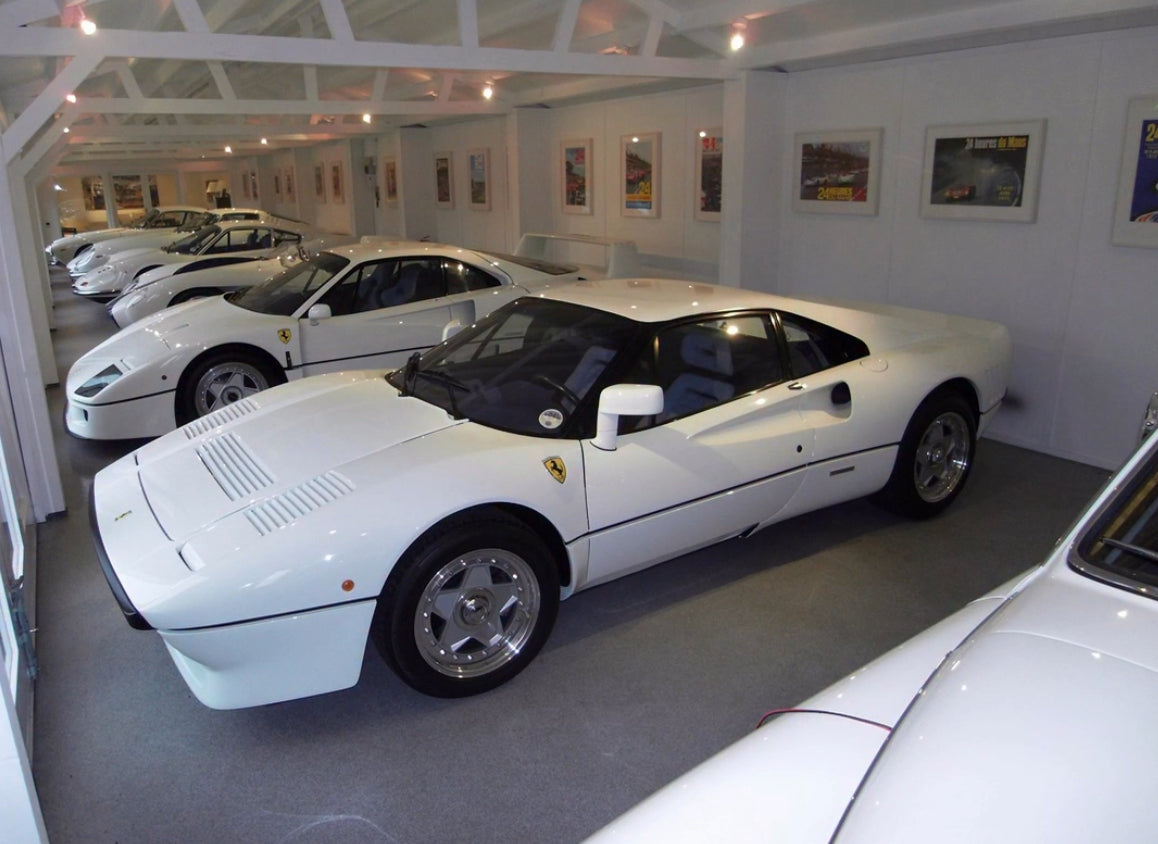
Take Chris Evans' white Ferrari 288 GTO, part of his famous "White Collection." It's a case study in what happens when you sell an appreciating asset too early and a masterclass in why the right car, held for the long term, can outperform almost anything else in your portfolio.
In 2009, Evans invested £100,000 to fully restore his 288 GTO. Repainting the body white and retrimming the interior in blue to match the rest of his now-legendary all-white Ferrari collection.
It was a car built with passion, not necessarily with an investment spreadsheet in mind. But that's exactly what makes what happened next so instructive.
The Sale: £450,000 in 2010
In 2010, Evans sold the 288 GTO along with the rest of his White Collection for an estimated £450,000.
At the time, that would have felt like a strong result for a Ferrari that was, by classic car standards, still relatively affordable.
Today: Over £10,000,000
Fast forward to 2026, and that same 288 GTO is valued at over £10,000,000.
To put the scale of that in context:
- £450,000 in 2010 is worth roughly £710,100 in today's money, adjusted for inflation
- Had Evans kept the car, his inflation-adjusted profit would be over £9,289,900
- That's a nominal 16-year return of over 2,120%
- A compound annual growth rate (CAGR) of roughly 22.2% per year
- Even adjusted for inflation, the real return still works out to around 19.1% per year
How Does That Compare to Traditional Investments?
For context, the long-run average annual return of the stock market (S&P 500, inflation-adjusted) sits in the region of 7–10% per year over multi-decade periods.
The 288 GTO's real, inflation-adjusted return of 19.1% per year doesn't just beat that it comfortably outperforms it, multiple times over. It also dwarfs any realistic return from a standard savings account across the same 16-year window.
This isn't a one-off. It's a pattern that repeats across the rarest, most historically significant cars in the market. Cars that combine scarcity, motorsport pedigree, and "last of their kind" engineering.
The Real Takeaway: It's Not Just About Million-Pound Ferraris
Most people will never own a 288 GTO. But the underlying principles that drove this car's growth. Rarity, provenance, being at the end of an engineering era, and buying before the wider market catches on apply at every level of the car market.
The hard part isn't understanding the theory. It's identifying which cars, right now, are sitting where the 288 GTO was in 2010. Undervalued, underappreciated, and not yet on the radar of the wider collector market.
Get the Full List: 100 Best Investment Cars for 2026
We've spent a serious amount of time putting together a genuinely non-generic list of the 100 best investment cars to buy in 2026. Cars that are underappreciated, last of their kind, and positioned exactly where buyer demand is heading next.
These are the cars with real potential to grow in value over the coming years, at price points far more accessible than a 288 GTO.
👉 Access the Full List of 100 Investment Cars for 2026



Share:
Afzal Kahn's LaFerrari: What It Teaches Us About Investing in Supercars
Lamborghini Aventador +$170,000 in 3 Years