
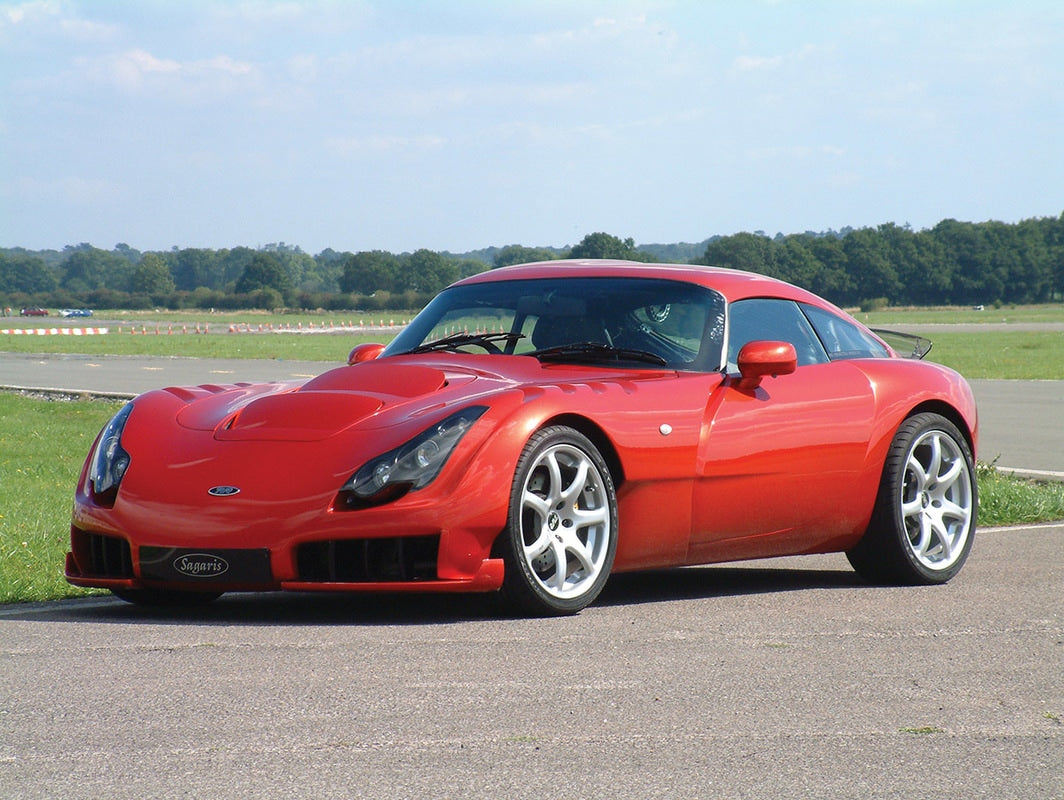
Money Can't Buy Happiness. But It Can Buy a TVR Sagaris for £120,000 That Won't Lose You Money.
No airbags. No traction control. No ABS. No driver aids of any kind. A 4.0-litre naturally aspirated straight-six producing 406 horsepower, mounted in a steel spaceframe wrapped in fibreglass, with power going exclusively to the rear wheels through a five-speed manual gearbox. Zero to 60 in 3.7 seconds. A top speed of 185mph. And a sound that no car built in 2026, or ever again, will replicate.
This is the TVR Sagaris. The last car TVR ever built. One of 213 made between 2005 and 2006, before the Blackpool factory closed for the final time.
At £120,000 for the finest surviving examples, it is one of the most compelling investment propositions in the British classic car market, and one of the most under appreciated.
What the Sagaris Is
The TVR Sagaris was designed with endurance racing in mind. It was the most focused, most thoroughly engineered car TVR ever produced, the company's chief engineer Daniel Boardman was, by his own admission, frustrated with TVR's well-documented history of build quality issues and set out to resolve them definitively in the Sagaris. The result was the best-built TVR ever made, the best-handling TVR ever made, and, by the market's verdict, the most desirable TVR ever made.
The Speed Six engine at its heart is a 4.0-litre straight-six developed entirely in-house by TVR, with dry-sump lubrication and a character utterly distinct from anything produced by any other manufacturer. It does not sound like a Ferrari V8. It does not sound like a Porsche flat-six. It sounds like itself, a British straight-six that builds to a howl above 6,000rpm and delivers a tactile, immediate, unmediated connection between driver and machine that is genuinely impossible to replicate in any modern supercar wrapped in driver aids and electronic management systems.
No traction control. No stability management. No airbags. No concessions. TVR built this car to trust the driver entirely, and the driver either rises to meet it or gets out.
Why Only 84 Are Left in the UK
Of the 213 Sagaris built, fewer than 84 are currently registered or SORNed in the UK, according to DVLA data. That number has been falling steadily, from 115 in 2016, to 110 in 2017, to 97 in 2018, to 84 today. Cars have been shipped overseas, damaged in accidents, broken for parts, or simply lost to time. The attrition is slow but consistent. Every year that passes, the number of surviving UK examples reduces further.
At 213 built total and 84 remaining in the UK, the Sagaris is not a niche collector car in the conventional sense. It is genuinely rare. Not Lamborghini Miura rare, not Ferrari F40 rare, but rare enough that finding a clean, well-maintained example in the right colour, with documented history and a recommissioned mechanical condition, requires patience and knowledge. The best examples do not come to market frequently. When they do, they move quickly.
The sell-through rate for Sagaris cars at auction is 92%, nine of every ten that come to market find a buyer. That is a statistic that reflects deep, sustained demand from a pool of buyers who know exactly what they want and move decisively when it appears.
TVR Is Never Coming Back, Not Like This
This is the investment case's structural foundation. The TVR brand has changed hands multiple times since the Blackpool factory closed in 2006. In 2025, the brand was acquired by Charge Holdings, an electric vehicle company. TVR is now, officially, an electric brand. The naturally aspirated, no-aids, rear-wheel-drive sports cars built in Blackpool are not coming back. There is no revival. There is no new Sagaris. There is no spiritual successor.
When the last Sagaris rolled out of Blackpool in 2006, the chapter closed permanently. The Sagaris is therefore not merely rare, it is irreplaceable. There is no path by which modern regulations, emissions standards, and the commercial imperatives of a contemporary automotive business could produce something equivalent. No airbags is not permitted. No ABS is not permitted. A 406-horsepower, fibreglass-bodied, rear-wheel-drive British sports car at this price and weight is not commercially viable in 2026. It was barely viable in 2005, and TVR went bankrupt proving it.
The Sagaris is the end of a lineage, the most extreme expression of Blackpool TVR, that will never be revisited. That is the same structural condition that drives the appreciation of every great analogue collector car: an irreplaceable experience, a permanently closed production run, and a growing pool of buyers who understand what they are losing as the years pass.
What £120,000 Buys
The TVR Sagaris was listed new at £49,995 in 2005. The market has recognised what that price failed to reflect about what the car actually was, and values have been moving accordingly. In average condition, examples trade around £64,695 at auction. The best documented, best-condition, lowest-mileage Sagaris cars are now asking £120,000 and above. The highest recorded UK public sale is £89,608, but private dealer prices for the finest examples consistently exceed that figure, and the ask prices on Pistonheads and specialist TVR dealers for outstanding examples sit at £100,000 to £120,000.
That trajectory, from £49,995 new to £120,000 for the finest examples twenty years later, on a car where the supply can only decrease and the pool of buyers who understand its significance can only grow, describes an investment case with obvious structural merit.
The important caveats apply. A TVR Sagaris requires specialist knowledge to buy correctly. The mechanical condition must be assessed by someone who knows the Speed Six engine and its service requirements. The history file matters enormously. And TVR ownership is not passive, these cars want to be driven and maintained by enthusiasts who understand them, not parked and forgotten.
But for the buyer who gets this right: a naturally aspirated, gated-manual, no-aids British supercar that sounds like nothing else on earth, owned in an era when every new car is turbocharged, electrified, and electronically managed, for £120,000 and rising. That is what this car represents.
We have helped 5,000+ car guys go from buying bad cars that lose them money to owning good cars that don't depreciate. You can access a 24-page guide of the 100 best investment cars to buy in 2026, selected in line with Autofolio's bespoke automotive investment process.

Share:
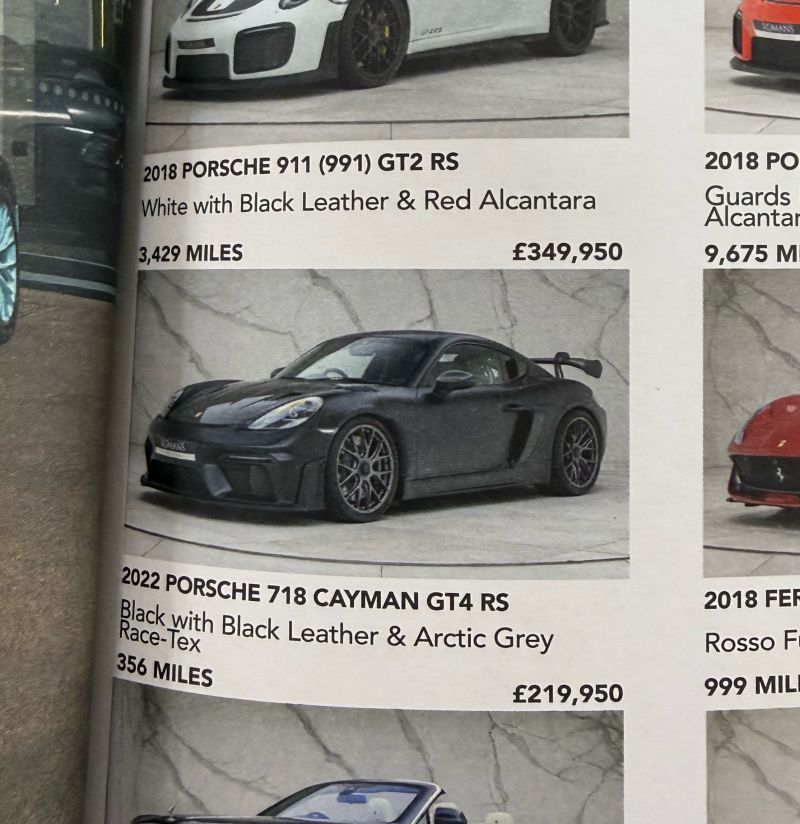
How Much Money You Would Have Lost Buying a 2022 Porsche Cayman GT4 RS. £94,000 in 3 Years.