
For nearly six decades, collectors have offered blank cheques. Mercedes-Benz refused every one.
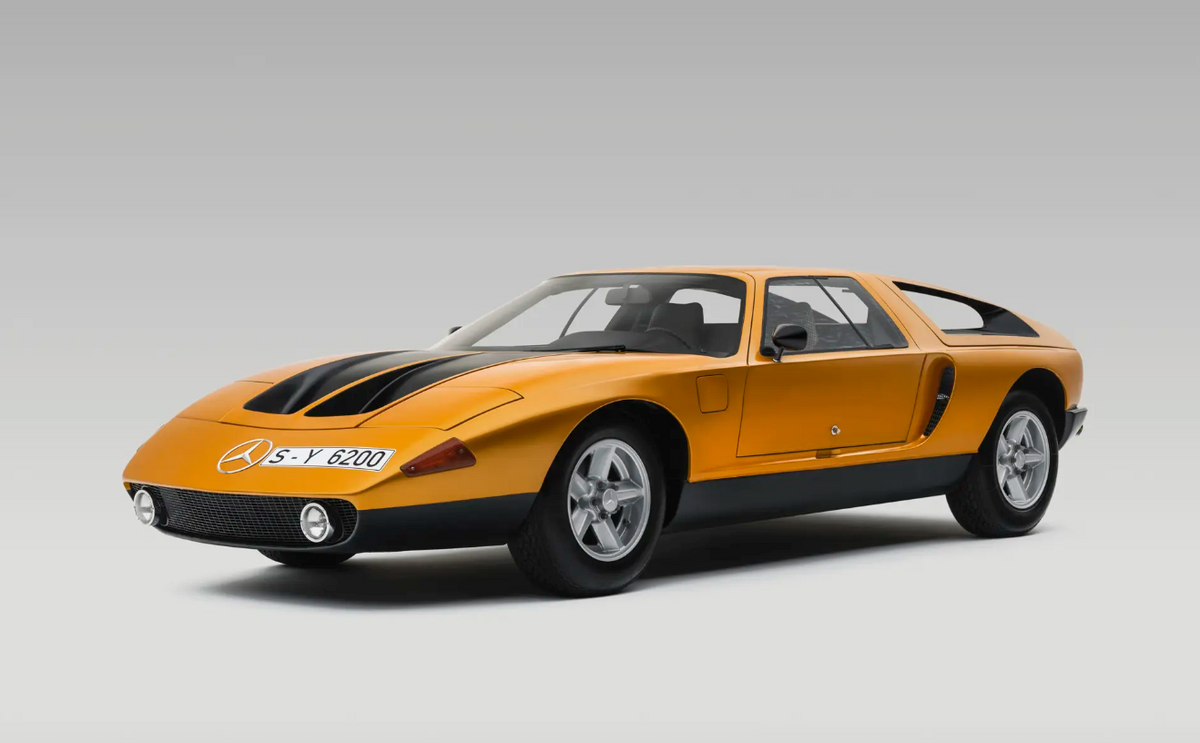
The Mercedes-Benz C 111 is one of the most mythologised prototypes in automotive history. A gullwing-doored, wedge-shaped experimental supercar that the company built in secret, showed the world, watched the world go mad for, and then locked away in Stuttgart for the rest of the century. Despite repeat offers from serious collectors at serious money, not a single example has ever been offered for public sale.
Until now.
On 3 February 2027, RM Sotheby's will offer a 1970 Mercedes-Benz C 111-II at the Palais du Louvre in Paris, during Rétromobile week. It is the first time in the company's history that a C 111 has been offered for sale. The estimate is in excess of €25 million. For the next 25 years, it will remain the only opportunity. Mercedes has contractually committed not to sell another C 111 during that period.
This is not a standard collector car auction. This is a once-in-a-generation event.
What the C 111 Is
 The Mercedes-Benz C 111 began as an internal engineering project in 1969. Mercedes wanted to explore two things simultaneously: the gullwing door format. The defining feature of the legendary 300 SL, and the Wankel rotary engine, which at the time represented everything the automotive world believed the future would look like. Compact, smooth, extraordinarily high-revving, with no reciprocating pistons and a power delivery unlike anything a conventional engine could achieve.
The C 111-II model going to auction is known internally as "Car 33." It was built from March 1970 and painted in the distinctive colour "Weissherbst." It carries an original 2.4-litre four-rotor Wankel engine producing approximately 350 horsepower, a figure that, in 1970, was extraordinary for a road-going machine. The gullwing doors lift dramatically upward. The wedge-shaped fibreglass body sits low and wide. The cabin is pure 1970s experimental supercar: functional, focused, and utterly unlike anything Mercedes put into production before or since.
Only 17 C 111s were ever built, with just 13 surviving today. All have remained in Mercedes-Benz ownership until now. The company has treated them not as cars but as artefacts. Displayed in the Mercedes-Benz Museum in Stuttgart, lent to major exhibitions, and consistently refused to every buyer who approached.
Why It Is Worth €25 Million. And Probably More
The standard collector car valuation framework does not apply cleanly to the C 111. There are no comparable sales to reference. No previous auction results to anchor expectations. No secondary market data. The car has never been sold, by anyone, at any price.
What exists instead is a framework of comparables from the broader ultra-rare Mercedes canon. The 1955 Mercedes-Benz 300 SLR Uhlenhaut Coupé. Another prototype that Mercedes held for decades before releasing one sold in 2022 for €135 million. The W196R Stromlinienwagen, another racing prototype offered by RM Sotheby's, sold for over $53 million in Stuttgart in early 2025. These are not production cars. They are historical objects. The physical embodiment of a specific moment in automotive engineering history, and the market for historical objects operates on different logic than the market for collector cars.

The C 111-II sits in that category. It is not a production Pagani or a rare-specification Ferrari. It is the third prototype ever built by one of the world's oldest and most significant car manufacturers, using an engine type that was never put into production, in a configuration that was never repeated. It is a research document made of metal and fibreglass. Unlike the 300 SLR and the W196R, it is coming to auction at Rétromobile, one of the most significant collector car events on the global calendar, which fills Paris with the exact buyers who want it.
The €25 million estimate is a floor, not a ceiling.
The €25 Million Question: What Else Could You Buy?
For the same €25 million, the collector car market in 2026 offers extraordinary alternative cars that are not prototypes, not museum pieces, and not subject to the question marks that come with any single-owner, never-sold, 56-year-old experimental vehicle.
A McLaren F1. Gordon Murray's central-driving-position, gold-lined-engine-bay, Le Mans-winning road car, now trades at around $25 million for a standard road car chassis. The McLaren F1 GTR, the racing variant, sold at Monterey in August 2026 for $34.6 million. For €25 million, you could acquire an outstanding F1 road car with change remaining.

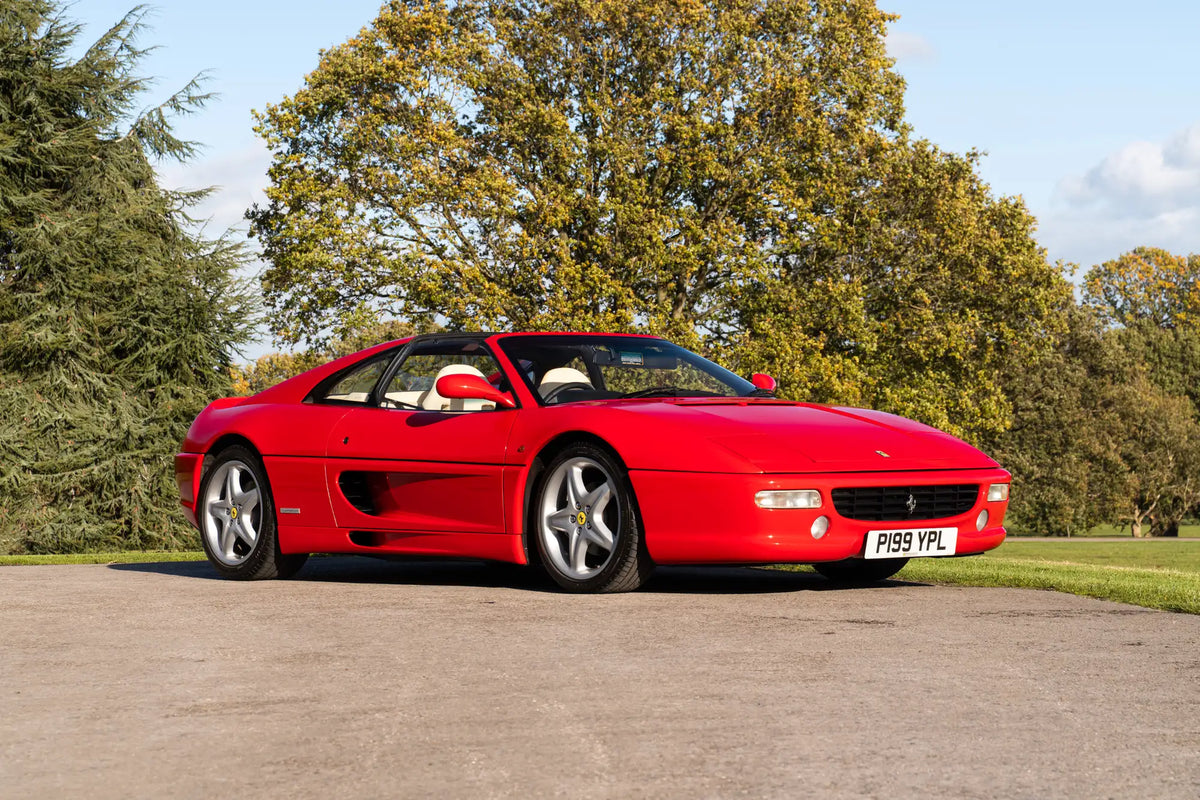
A Ferrari F40, the last car signed off by Enzo Ferrari personally, 1,315 built, the definitive analogue supercar now averages $5 million, with the finest examples at $8 million. For €25 million, you could own 3 exceptional F40s simultaneously, with significant capital remaining.
For the C 111, its upside, in the right hands, is theoretically unlimited. Its liquidity is essentially zero for the next 25 years. The buyer of this car is making a bet that the institution of Mercedes-Benz, and the historical significance of this specific prototype, will command a premium over €25 million at the point they eventually choose to sell. That bet may well be correct. But it is a different kind of bet than buying an F40 or an F1.
What This Sale Means for the Collector Car Market
The C 111's appearance at Rétromobile 2027 is significant beyond the transaction itself. It signals, clearly, that the ceiling for genuinely singular automotive objects has not been found. Mercedes-Benz expects to get at least €25 million for it, and the proceeds will fund the Mercedes-Benz Museum 2.0 project. Suggesting the company regards this as a culturally important transaction, not merely a commercial one.
The 300 SLR Uhlenhaut sale in 2022 at €135 million established that automotive prototypes of historic significance operate in a different market from production collector cars. The C 111 is the next test of that market. And the contractual commitment not to sell another C 111 for 25 years. This will remain unique for the next 25 years as per their contract, meaning that the buyer in Paris on 3 February 2027 is acquiring the only privately-held C 111 that will exist for a generation.
That is an extraordinary position to be in. It is also an extraordinarily expensive one.
The right cars don't depreciate. But the right cars are rarely €25 million prototypes offered once in a lifetime. For every buyer who belongs in that room at the Louvre, there are ten thousand who would be better served knowing which £50,000 car today will be worth £150,000 in five years.
Don't buy cars that will lose you money. I've spent a significant amount of time putting together a non-generic list of the 100 best investment cars to buy in 2026. Cars that are underappreciated, last of their kind, and where the market of buyers is growing.

Share:
7 Things That Happened at the Iconic NEC Sale That Car Investors Need to Know