
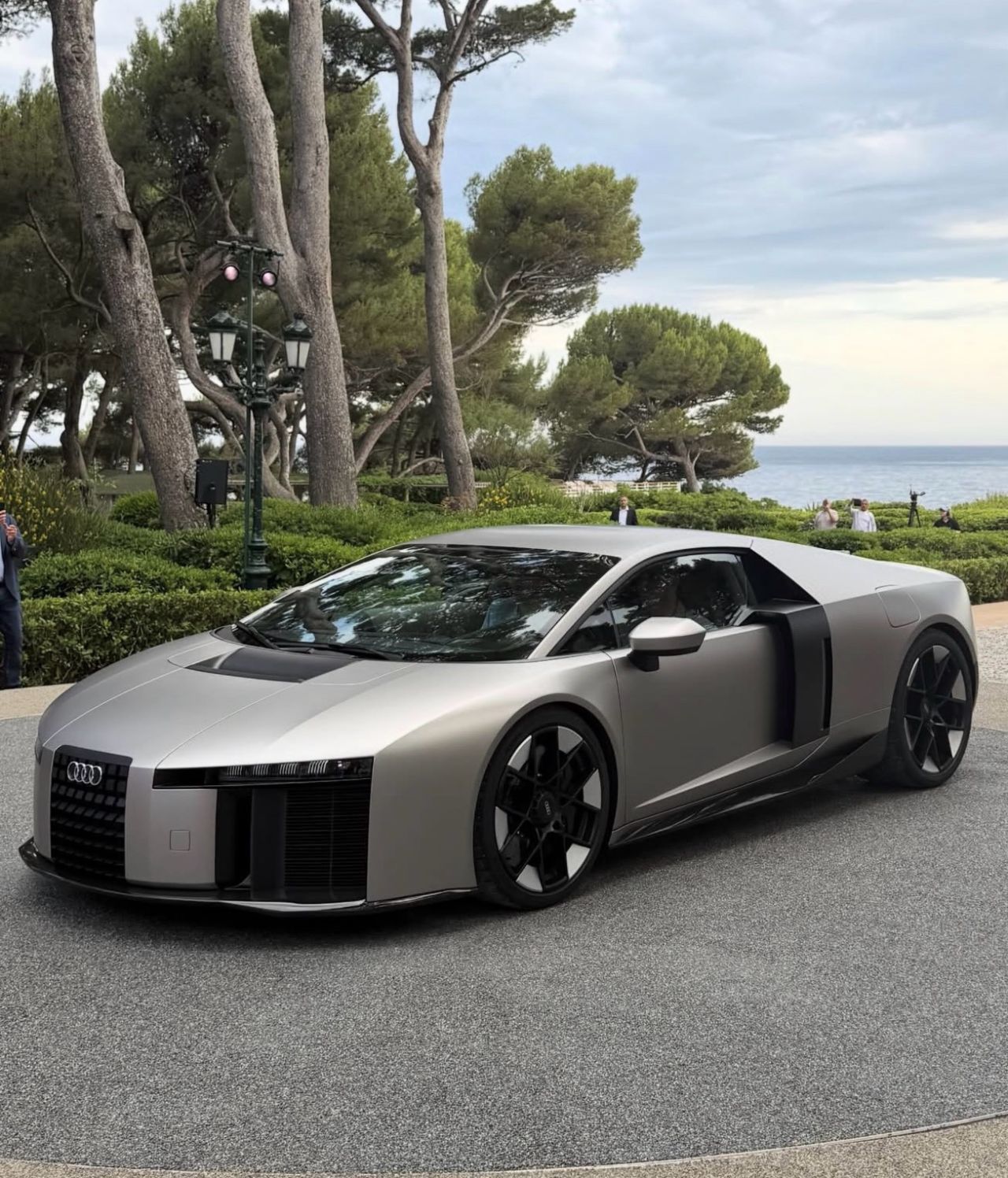
What You Are Actually Buying
The new model sits on the same platform as the Lamborghini Temerario. The Temerario uses a twin-turbo V8 hybrid powertrain producing around 920 hp from the combustion engine alone, with the hybrid system pushing total output beyond 1,000 PS.
The Audi version delivers that same headline number with its own bodywork, its own interior, and its own badge. It is, in the most straightforward terms, the Audi interpretation of a Lamborghini. That is not a criticism of the engineering — the Temerario's platform is genuinely extraordinary — but it is a relevant fact when thinking about what the market will make of it in five to ten years.
The R8: A Useful Reference Point
The original R8 is one of the most successful modern cars from a value retention perspective among everyday supercar buyers. The V10 variants in particular have held well, and early production cars have seen real appreciation. The R8 benefited from a naturally aspirated V10, a mid-engine layout, a pool of passionate buyers, and a price point that brought it within reach of a wider market.
The new model starts at four times that price. The buyer pool shrinks dramatically at £500,000. The overlap with the Lamborghini it is based on creates a natural ceiling — why pay Audi money for a car that is broadly the Lamborghini version for less? These are the structural questions that tend to determine how collector markets develop.
The Hybrid Supercar Problem
There is a clear trend emerging in the hybrid supercar market and it is not an encouraging one for investors. Demand for hybrid high-performance cars has softened in a number of segments. The technology story — which justified enormous premiums at launch — has become less compelling as more manufacturers produce more powerful hybrid systems. What was genuinely rare and extraordinary three years ago now has competition from several directions.
Buyers who care primarily about performance can access similar or greater numbers at lower prices. Buyers who care about exclusivity and collector value tend to gravitate towards pure combustion engines — the last of the naturally aspirated greats — rather than the first generation of hybrid replacements.
The new Audi sits uncomfortably between those two camps.
499 Units Is Not as Limited as It Sounds
Limited production is one of the factors that supports long-term value in cars like this. But 499 units is not truly rare — it is constrained enough to generate interest but numerous enough to supply demand from buyers who want one. Compare it to the Ferrari F40 (1,315 units), which has appreciated exponentially, or the Porsche Carrera GT (1,270 units), which is now trading at well over its original price. Those cars had something else working in their favour: they were the end of something. The last of the great analogue supercars. The Audi is not the end of anything — it is the beginning of a new, more expensive chapter.
The Bottom Line
This is an incredible machine on paper. The performance numbers are extraordinary, the engineering is serious, and the design will divide opinion in the way all genuinely distinctive cars do.
But as an investment at £500,000 — in a hybrid supercar category where demand has softened, from a brand that is making the Lamborghini version of a Lamborghini, at three to four times the price of the car it effectively replaces — the numbers do not add up the way they need to at this level.
My view is that it will not retain value against its asking price. That may be wrong. But the structural conditions that produce strong collector car appreciation — scarcity, emotional purity, being the last of something irreplaceable — are not present here in the way they need to be.
Don't Buy the Wrong Cars
I have helped 5,000+ car guys go from buying bad cars that lose them money to owning good cars that do not depreciate. Not every car with a big number and a limited production run is a good investment. The cars that hold value and grow over time tend to have something specific in common — and it is not horsepower.



Share:
The Lamborghini Gallardo: £70,000 for a V10 Supercar That's About to Be Worth a Lot More
Audi RS4 B7 Avant vs New RS5