
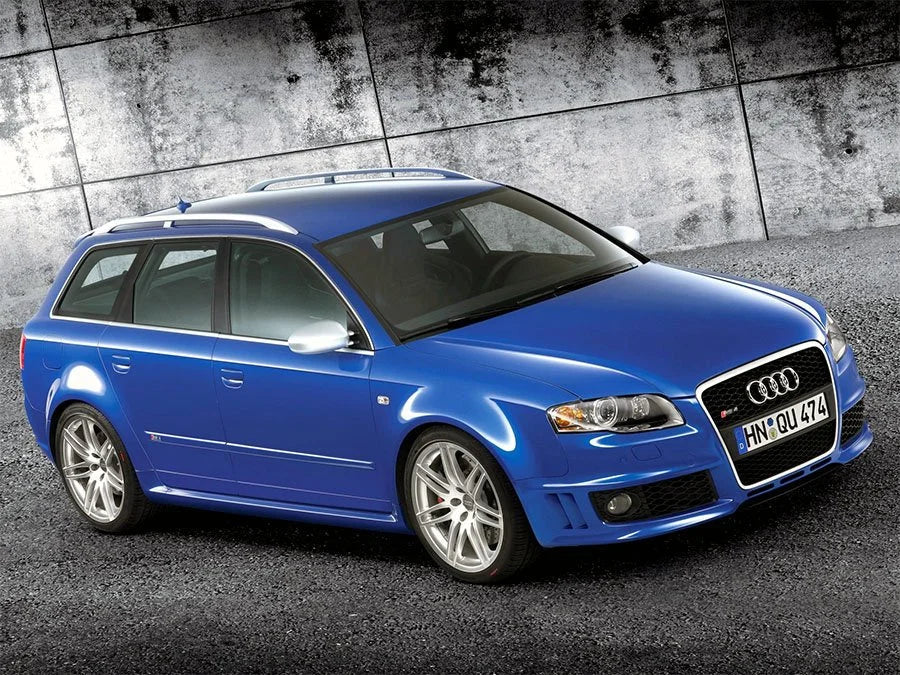
The RS4 B7 was produced between 2006 and 2008. It is, by any measure, the last true analogue RS4 estate. The last one with a naturally aspirated engine and a proper manual gearbox.
The engine is a 4.2-litre naturally aspirated V8 producing 420 horsepower with an 8,250 rpm redline. It sits in a car that weighs 1,670kg and puts its power through all four wheels via a six-speed manual gearbox. This combination, a naturally aspirated V8, manual, quattro, estate body, does not exist anywhere in the current new car market. It cannot be replicated. And Audi will never build it again. Every RS4 that has followed has been with an automatic.
What Has Happened to the Values
The RS4 B7 spent several years trading in the £15,000 to £25,000 range, comfortable used car money for what most people treated as a practical performance estate. That pricing is no longer where the market sits.
Investment-grade examples, low mileage, full service history, standard specification, and correct colour are now selling for over £50,000. With one example recently sold for over £68,000.
That is a significant repricing. And it is not finished. The RS4 B7 is crossing the threshold where the collector market begins to distinguish between the cars that happen to exist and the cars that matter. The B7 is firmly in the second category.
The RS5 Problem
The current RS5 is a turbocharged, hybrid, technology-dense performance car that costs over £100,000 with a reasonable options list. It is quick, capable, and refined.
It is also the kind of car that loses its owners tens of thousands of pounds year over year. Modern turbocharged Audi performance cars like their equivalents from BMW and Mercedes depreciate aggressively as technology moves on, as newer generations arrive, and as the buyer pool that wanted the previous version moves to whatever is newest.
The RS5 you buy today at £100,000 will be worth meaningfully less in three years. The RS4 B7 you buy today has a realistic case for being worth more.
What to Buy and What to Avoid
Colour matters. Imola Yellow and Deep Green Pearl are great options. Silver and grey examples are abundant and trade at a discount. Interior condition is critical and the wingback bucket seats are the ones to have.
Avoid modified examples. The RS4 B7 attracts a loyal tuning community, and a meaningful proportion of the cars on the market have been chipped, exhausted, and lowered. None of that adds value to a collector. It removes it. The investment car is the standard one.
The Broader Point
The RS4 B7 sits in a category of cars that the market consistently undervalues until it doesn't: last of their kind, mechanically irreplaceable, in a growing pool of nostalgic buyers, at a price point that still feels accessible relative to where they are going.
The new RS5 is a very fast way to spend £100,000 and get £70,000 back. The RS4 B7 is a very different kind of transaction.
Don't buy the wrong cars. I've helped 5,000+ car guys go from buying bad cars that lose them money to owning good cars that don't depreciate. I've manually put together a non-generic list of the 100 best investment cars to buy in 2026. Cars that under-appreciated, last of their kind, and where the market of buyers is going.

Share:
The New Audi Supercar Starts at £500,000. Here's Why It Won't Hold Its Value.
Ferrari 360 Challenge Stradale: $185k in 2018. $1,000,000+ Today