
There is a pattern that repeats itself across the collector car market with remarkable consistency. A car launches. The market misunderstands it. Prices soften. Informed buyers quietly acquire examples. Then the market catches up — and the people who were paying attention make extraordinary returns.
The four cars below were all, at various points, written off. Each of them handed patient, knowledgeable buyers one of the most reliable investment opportunities available: a great car at the wrong price.
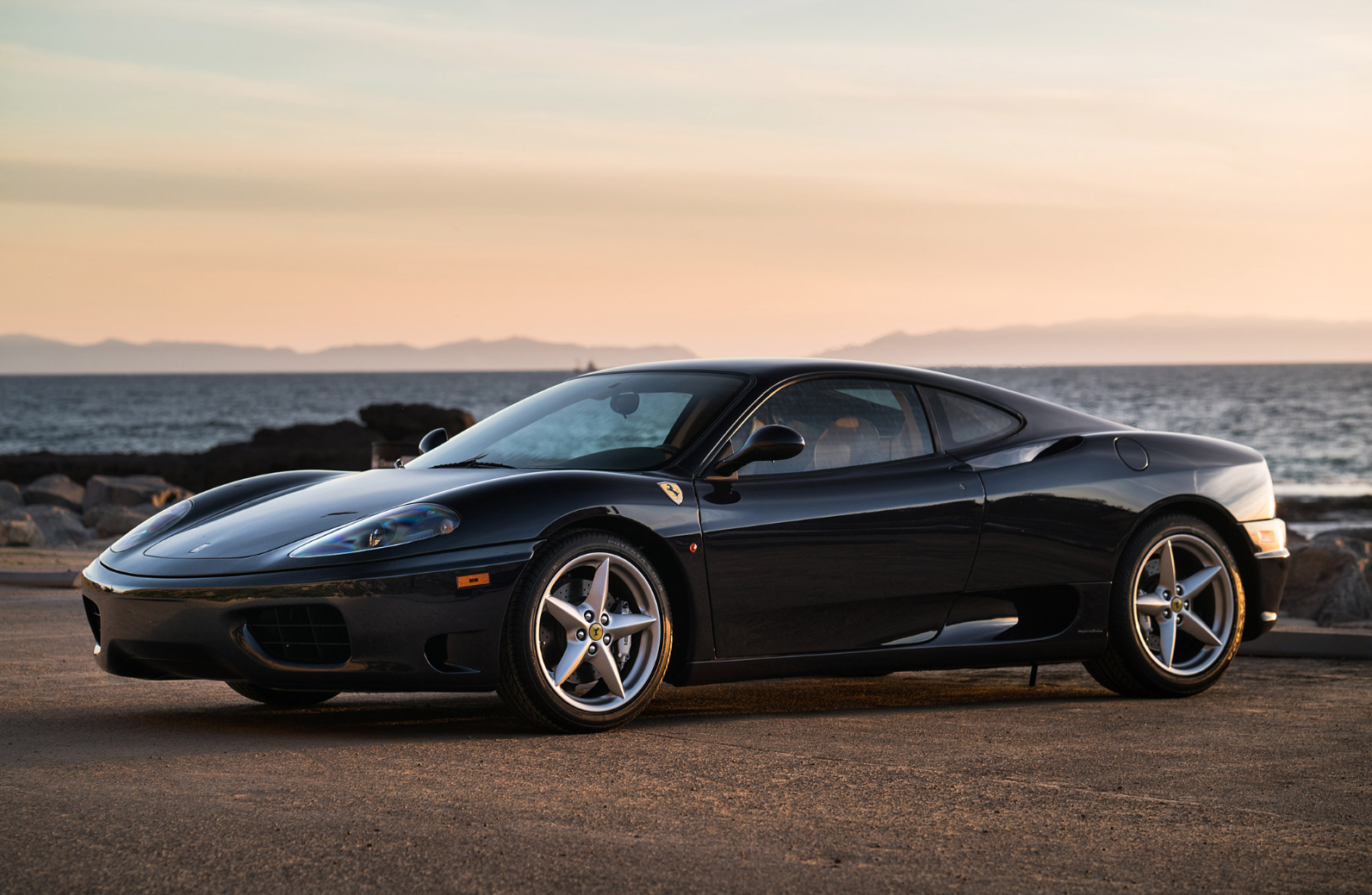
No.1 — Ferrari 360 Modena — Six-Speed Manual
Dismissed: “Ugly. Overshadowed by the F355. Too many built.”
Bottom of market: ~$55,000 → Today: $250,000+
What the market said: “The 360 isn't as pretty as the F355. Ferrari built 17,000 of them. The F1 paddle-shift gearbox is clunky. There's nothing special here.”
For much of the 2010s, the Ferrari 360 Modena was the forgotten middle child of the modern Ferrari range. Prices bottomed out around $55,000 at the low point.
What the dismissive consensus missed was the manual gearbox. Fewer cars left Maranello with the six-speed gated shifter. The market has now sorted itself decisively into two tiers. The manual twin averages $119,325 — and the best examples are pushing well beyond that. The highest recorded sale for a 360 Modena manual was $263,200 on March 7, 2026.
$263,200 Record sale, March 2026
Why it worked: The six-speed gated manual was always the rarer, more engaging transmission. As the market understood that the manual 360 represents the last accessible, naturally aspirated Ferrari V8 with a proper gearbox, the premium became permanent.
No.2 — Ferrari Testarossa
Dismissed: “Too many built. Too wide. Outdated 1980s excess.”
Low point: ~$60,000 → Today: $250,000+
What the market said: “Ferrari built 7,200 of them. It's too heavy, too 1980s, too unreliable. It'll never appreciate like the real classics.”
For decades, the Ferrari Testarossa was caught in an awkward position. The market parked it between $60,000 and $100,000 for years and left it there.
Then the nostalgia wave arrived. The generation that grew up with the Testarossa as the most outrageous poster car of the 1980s — immortalised in Miami Vice — reached the age and wealth at which they could finally buy one. The average price of a Ferrari Testarossa now stands at $250,000+
Why it worked: Cultural significance compounds over time. The dismissal of the car as "too many built" ignored that specification matters enormously within a large production run — early Monospecchio examples with the single driver's mirror and centre-lock wheels are genuinely rare and commanding substantial premiums.
No.3 — Lamborghini Diablo SV
Dismissed: “Unreliable. Terrifying to drive. Primitive engineering.”
Mid-2010s: ~$130,000 → Today: $650,000+
What the market said: “The Diablo is unreliable, difficult, and terrifying at the limit. The Murciélago is better in every way. There's no reason to own one.”
The Lamborghini Diablo spent years being outrun — in the market's imagination — by its more modern successor. The market priced it accordingly.
The Diablo market experienced explosive growth throughout 2024 and early 2025. A 1999 Diablo SV reached $650,000 at Monterey Car Week 2024. The average transaction price on Bring a Trailer has increased by 136% over the last five years.
$650,000 1999 Diablo SV — Monterey 2024
Why it worked: What the market called primitive, collectors called irreplaceable. The Diablo SV was the last raw, naturally aspirated, rear-wheel-drive Lamborghini built without Audi's civilising influence. Bonhams specialist Allan Greenfield: "There's a lot of value in Diablos. I don't think the market has really caught up."
No.4 — Mercedes-Benz SL73 AMG (R129)
Dismissed: “Just a big, heavy old Mercedes. Nothing special.”
2015: ~$85,000 → Today: $600,000+
What the market said: “It's a heavy old Mercedes roadster with an AMG kit. Nothing here that justifies a premium over a regular SL600.”
On the surface, the Mercedes-Benz SL73 AMG looks almost identical to any other R129 SL from the 1990s. For years, the market penalised it for its restraint, pricing it not far above a well-maintained SL600.
The Mercedes-Benz SL73 AMG was powered by a 7.3-litre naturally aspirated V12 producing 518hp — the same unit later used in the Pagani Zonda. AMG built just 85 examples. When buyers finally made the connection between the unassuming Mercedes roadster and the engine powering the Zonda, values moved decisively.
Why it worked: AMG made somewhere 85 of these — dozens, not hundreds — compared to the 140 or so Zondas that Pagani has made. The SL73 remains the rarer beast. Market ignorance had compressed values to $85,000 in 2015. That mis pricing is now permanently corrected.
What These Four Cars Prove
Each of these cars followed the same arc. Launched. Misunderstood. Priced incorrectly by a market that focused on the obvious weaknesses. And then, gradually or suddenly, reappraised as collectors did the research that the market had failed to do at the time.
“The best investment cars are almost never the obvious ones. They are the ones hiding in plain sight — dismissed, underpriced, and waiting for the market to catch up.”
That window has closed on the Ferrari 360 Manual, the Testarossa, the Diablo SV, and the SL73 AMG. But the same conditions exist in the collector car market right now. They exist in cars that will look, in ten years, exactly like these four do today.
"Great team who know their stuff. If you're looking for a luxury investment then you can't go wrong with Harry's advice."
— Ben Lilly, Car Collector
The Cars Everyone Is Dismissing Right Now Are in This List.
I’ve spent a significant amount of time putting together a non-generic list of the 100 best investment cars to buy in 2026 — under-appreciated, last of their kind, and where the market of buyers is growing. 100 opportunities to profit from your passion. 100 cars that won’t depreciate.
👉 Access the 100 Best Investment Cars for 2026

Share:
Ferrari, Please Make Cars Like This Again. The 430 16M Just Hit $1.98 Million.
What Was in the Air in 2007? The Ferrari 430 Scuderia Is Now Worth $500,000